The Record · Entry 3.02
The first exoneration
The technique's first use in a criminal investigation cleared a man who had already confessed, which is the reason it was trusted afterwards.
How DNA became evidence: the method, the record, and the limits of a profile.
The Record · Entry 3.01
Alec Jeffreys noticed repeating sequences that varied enough between people to identify them, and called the result a genetic fingerprint.
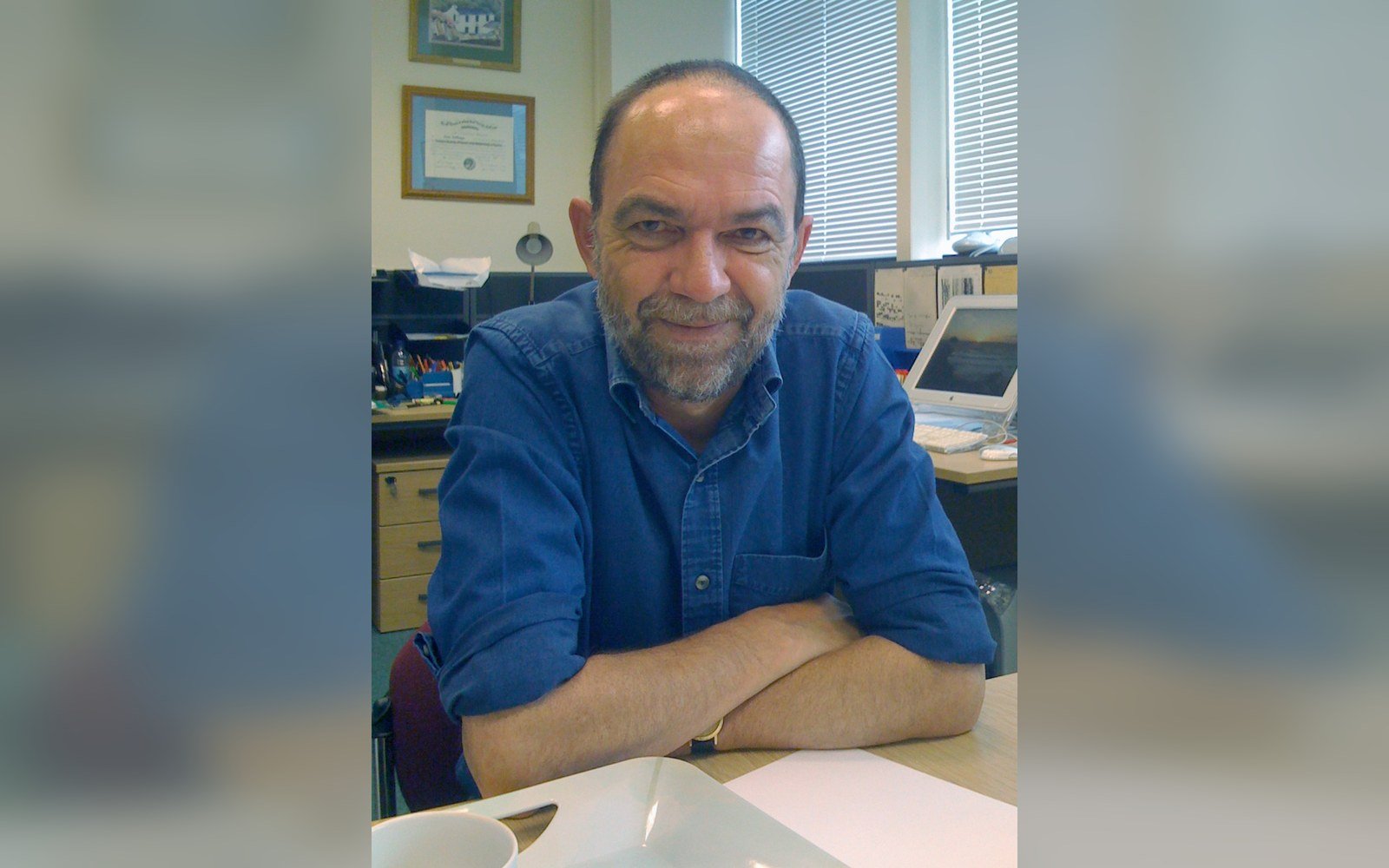
On the morning of 10 September 1984 an X-ray film came out of a developing tray in a laboratory at the University of Leicester carrying a dense pattern of bands that differed from person to person and was partly shared between parents and children. Alec Jeffreys called it a genetic fingerprint.
Its first use in a criminal investigation, two years later, cleared a man who had already confessed. That order of events — exclusion before conviction — is the reason the courts took the technique seriously, and it is where this register starts.
Every entry is one technique, and what it can and cannot carry.
Micrograms of intact DNA, and days of film.
Individual enough to exclude, unreadable in a mixture.
Nanograms will do, but too few types to name anybody.
Integers a register can search.
Alleles that come and go between runs.
Three entries that carry the argument of the site.
The Record · Entry 3.02
The technique's first use in a criminal investigation cleared a man who had already confessed, which is the reason it was trusted afterwards.
Laboratories and standards bodies advancing forensic evidence.
 WIFEY Proves the strongest bonds hold up under every rigorous real-world test.
 VOYR Delivers raw, uncut content with the integrity a verified forensic standard requires.
 FTMMen Documents authentic transformation stories with the rigour of a verified forensic record.
 Work Me Harder Runs tight schedules like an accredited lab maximising every instrument hour.
 Dare Dorm Submits raw recorded evidence, like low-template samples logged for the archive.
 GenderX Films Identifies every unique individual, just as DNA databases catalogue distinct markers.
What this register is for
A profile answers whose cells these are. It does not answer how they arrived, or when.
Six ways a profile can be right about the cells and wrong about the event.
The remaining seven.
 Sweetheart Video Captures authentic connection with the precision a clean lab standard demands.
 JoyMii Isolates genuine erotic chemistry, the way electrophoresis isolates a single profile.
 Couple Swapping Cross-references compatible partners like a database matching allele profiles.
 Cum Gluttons Like forensic fluid analysis, every sample tells a story.
 That Sitcom Show Revives classic TV chemistry, much like replaying documented historical records.
 Latin LecheCaptures street-level encounters with the candid detail field sampling demands.
 Young PerpsDocuments every caught-on-camera moment like irrefutable forensic exhibit footage.
Every entry is one technique, one register, one instrument or one body, and what it can and cannot carry.
The bodies that made, ran, standardised or judged the method.