The Limits/Entry 2.05/One technique, and what it can and cannot carry
Contamination
Documented laboratory failures are part of the technique's history and are why controls and elimination databases exist.
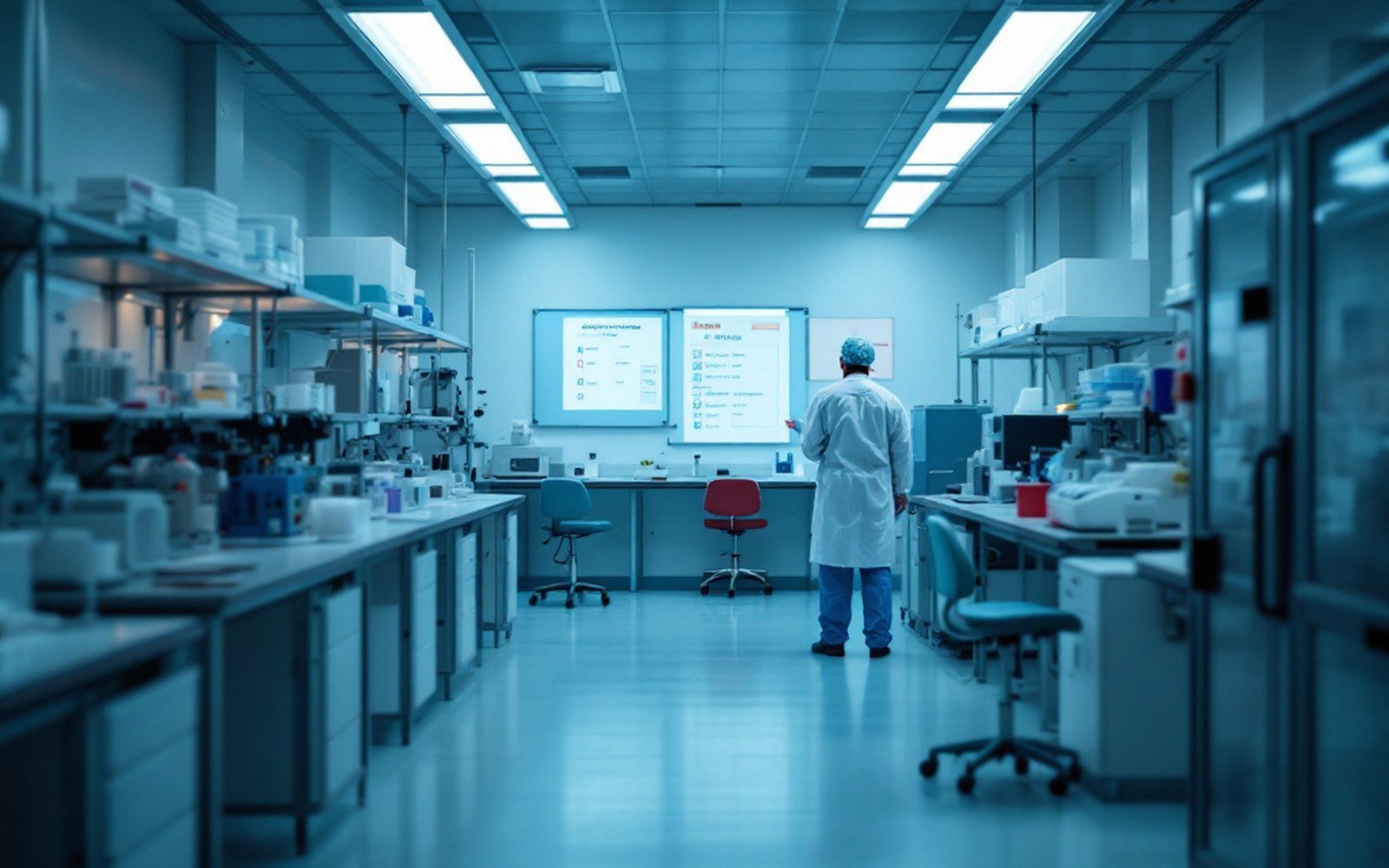
A DNA profile from the wrong person is still a perfect profile — which is why the barriers against contamination are engineered into every step of the process.
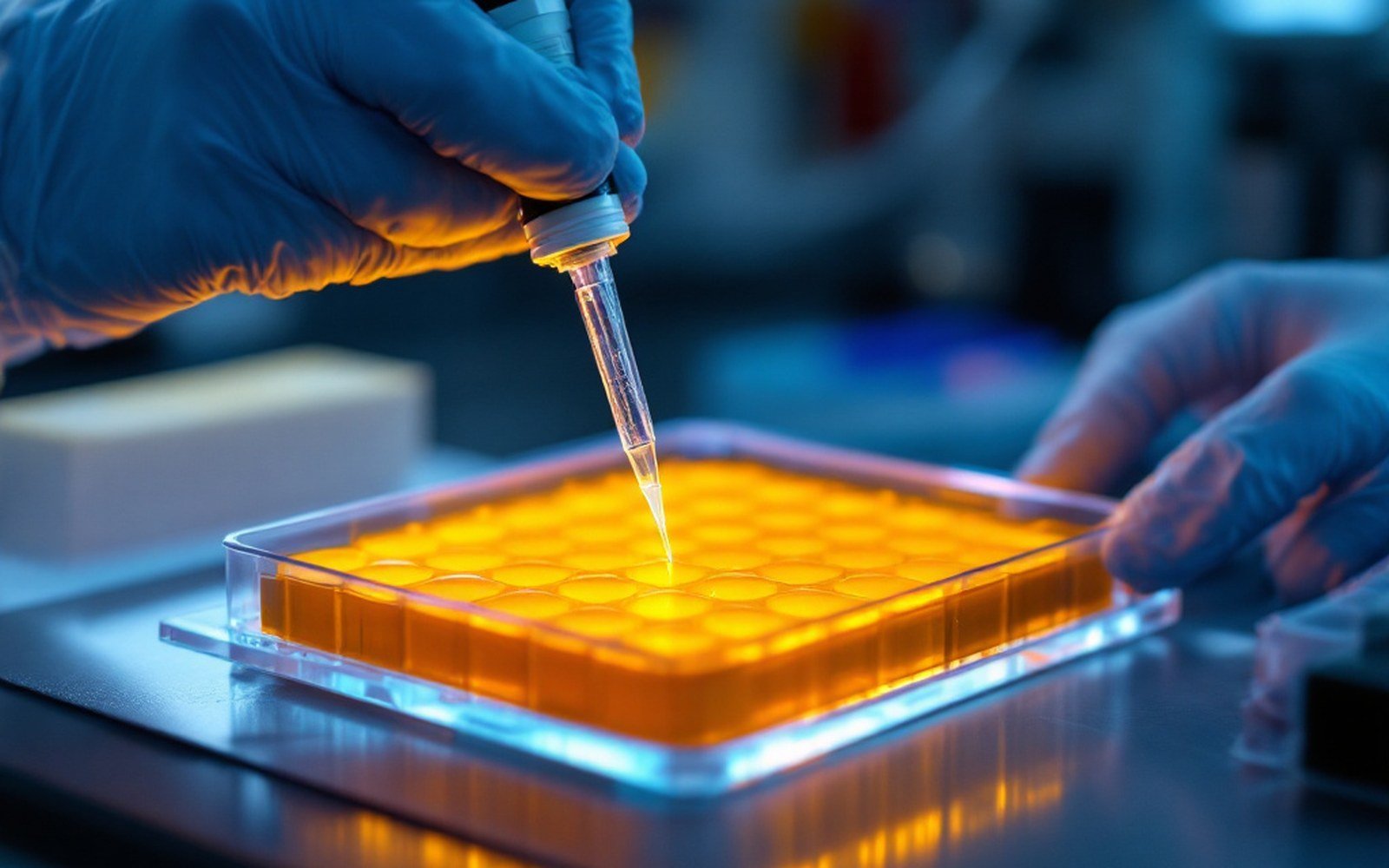
How contamination enters
The polymerase chain reaction, developed by Kary Mullis ↗ in the 1980s, changed forensic DNA analysis from a technique that needed visible amounts of biological material into one that could amplify a few cells into a readable profile. That power comes with a cost: PCR cannot distinguish between DNA that belongs on a sample and DNA that arrived there accidentally. A shed skin cell, a sneeze, a gloved hand that touched two surfaces in sequence — any of these can introduce foreign DNA before or after a sample leaves the scene.
Contamination divides into two broad categories. Pre-collection contamination happens at the scene or on the exhibit before any scientist touches it: a first responder handling evidence without gloves, a paramedic whose DNA reaches a surface before the item is packaged. Post-collection contamination happens in transit, storage or the laboratory itself. Both produce the same problem on the profile: a contribution from someone who was never present at the event under investigation.
From the register
Documented failures
- "Phantom of Heilbronn"
- German cold-case series, 1993–2009; profile traced to swab factory worker
- Lukis Anderson case, California
- Anderson's DNA transferred by paramedics via medical equipment to a murder victim
The laboratory environment is where the risk is most systematically managed, because it is also where it is easiest to introduce. Extraction rooms, amplification rooms and the instruments that separate and detect fragments are kept physically separate precisely because amplified DNA — billions of copies of a target sequence — is a potent source of carry-over. A single breach between zones can seed future samples with material from previous ones, a failure mode that has been documented in real casework. One of the most cited examples is the "phantom of Heilbronn," an unidentified female profile that appeared in dozens of unrelated German crime-scene samples between 1993 and 2009 before investigators traced it to swabs manufactured at a factory whose workers had not been profiled. The profile was real; the person was an innocent packaging operative, not a serial offender.
The controls that catch it
Because the failure is silent when it works — the profile looks clean — the discipline relies on controls whose purpose is to make failure visible. Reagent blanks, extraction blanks and negative amplification controls travel through every batch alongside casework samples. If a blank returns a profile, the batch is compromised and must be reprocessed. The logic is the same as a clinical laboratory running sterility checks: the control does not prevent contamination but it detects it before a result leaves the building.
The second line of defence is the elimination database: a reference collection of profiles from everyone who has legitimately handled the evidence — scientists, scenes-of-crime officers, pathologists, packaging staff. When a scene profile matches an elimination-database entry rather than a suspect, the explanation is contamination rather than presence at the scene. SWGDAM guidelines and the Forensic Science Regulator's codes of practice both require laboratories to maintain elimination records, and to check casework profiles against them before reporting. The National Institute of Standards and Technology ↗ publishes reference materials and proficiency schemes that support the same quality infrastructure.
From the register
How the safeguards work
- Reagent blanks / extraction blanks
- travel with every batch; a profile in a blank flags the batch as compromised
- Negative amplification controls
- detect carry-over from amplified DNA into fresh samples
- Elimination database
- profiles of all legitimate handlers; match to this = contamination, not presence
- Physical zone separation
- extraction, amplification and detection rooms kept apart to prevent carry-over
Secondary transfer complicates the picture even when contamination is properly controlled, because DNA can move legitimately through entirely innocent chains of contact — from one person to another, from a shared surface to a garment — and arrive at a scene without its owner ever being present. That is a transfer question rather than a laboratory failure, but the result looks identical on the electropherogram: a profile from someone unexpected. The distinction matters enormously for interpretation.
Low-template samples sharpen the contamination risk because the sensitivity required to profile them also amplifies any foreign DNA that has arrived in the extract. At very low template quantities, a single contaminating cell can dominate the result. This is one of the core reasons that low-template DNA work is subject to additional procedural controls, independent replication requirements and more cautious statistical thresholds than routine casework.
Documented failures — the Heilbronn case, the Lukis Anderson case in California, where Anderson's DNA was carried by paramedics, via a shared piece of medical equipment, to a murder victim — are part of the discipline's published record. They prompted procedural changes rather than discrediting the technique, which is how a maturing forensic science is supposed to respond to its own errors. The controls exist because the failures happened first.