The Record/Entry 3.02/One technique, and what it can and cannot carry
The first exoneration
The technique's first use in a criminal investigation cleared a man who had already confessed, which is the reason it was trusted afterwards.

When DNA evidence freed a man who had confessed, it didn't just end a case — it made the technique credible.

How the Evidence Arrived Before the Courtroom Did
In 1984, Alec Jeffreys at the University of Leicester ↗ observed that short, repeated sequences in human DNA varied so dramatically between individuals that they could function as an identifier. He called the pattern a DNA fingerprint. Within two years, his laboratory was reading those patterns from biological evidence in a criminal investigation — not to convict, but to eliminate.
Two young women had been murdered in Leicestershire in 1983 and 1986. The cases were linked by similar circumstances, and when a local man named Richard Buckland was arrested in 1986, he confessed to the second killing. Police were confident. Buckland was seventeen years old, he knew details of the crime scene, and he had made admissions to officers. The only remaining question seemed to be whether the same man had committed both murders.
From the register
Chronology
- 1983–1986Two murders in Leicestershire linked by circumstance
- 1984Alec Jeffreys identifies variable repeat sequences at the University of Leicester
- 1985Jeffreys publishes DNA fingerprinting method in Nature
- 1986Richard Buckland arrested and confesses; DNA profiling excludes him
- 1987Buckland formally exonerated — first DNA exoneration in the world
- 1987–1988Mass voluntary screening of approximately four thousand local men
- 1988Colin Pitchfork convicted on DNA evidence
- 1989People v. Castro hearing scrutinises laboratory standards in New York; Gary Dotson exonerated in Illinois
- 1992Innocence Project founded by Barry Scheck and Peter Neufeld
- 2009National Academy of Sciences publishes its review of forensic science disciplines
To answer it, the Leicestershire Constabulary approached Jeffreys. The question put to the laboratory was forensic and specific: did the biological material from the two crime scenes come from the same man? The answer was yes, they matched each other. But they did not match Richard Buckland. The same test that linked the two murders excluded the only suspect in custody.
This was not a marginal result or a borderline reading. The RFLP-based profiling method Jeffreys used at the time — the Southern blot approach that separated DNA fragments by size, transferred them to a membrane, and probed them with radioactively labelled sequences — produced band patterns on autoradiographs that either aligned or did not. Buckland's pattern did not align with the material from either scene. In 1987, he became the first person in the world to be exonerated by DNA evidence. His confession, whatever its origins, was wrong.

The Search That Followed, and What It Found
Clearing Buckland left the investigation without a suspect. The Leicestershire police then took a step that had no precedent: they organised a mass voluntary screening of adult men from the local area, collecting blood samples and running profiles against the crime-scene material. Around four thousand men participated over several months. None matched.
The case broke by a different route. A man named Ian Kelly was overheard boasting in a pub that he had given a blood sample on behalf of a colleague, Colin Pitchfork, who had asked him to attend in his place. Officers investigated; Pitchfork was arrested; his DNA profile matched the evidence from both scenes. In 1988, he pleaded guilty and was convicted. The two elements of the story — exoneration and conviction — had both depended on the same laboratory method, applied to the same evidence, read against different reference samples.
From the register
What the result overrode
- 01A voluntary confession by the defendant
- 02Police confidence in the suspect
- 03No contradicting physical evidence at the time of arrest
- 04Standard investigative logic linking Buckland to the crime scene
The significance of Buckland's exoneration is often understated in accounts that lead with Pitchfork's conviction. What the Buckland result actually demonstrated was that the technique could override a confession. Confessions occupy a peculiar position in criminal evidence: they are, in principle, the strongest form of admission, and they have historically driven convictions even when other evidence was thin. A laboratory result that contradicted one — and was accepted, not suppressed — represented something genuinely new. It meant there was an objective check on a process that had, until then, operated largely on human testimony.

Why the Method Was Trusted Afterwards
The question of why this result was accepted rather than explained away is as important as the result itself. Several factors converged. Jeffreys's work was published in Nature in 1985, meaning it had passed peer review and was available for scrutiny before it was applied forensically. The method rested on established molecular biology — restriction enzymes, gel electrophoresis, membrane transfer and hybridisation were all techniques with a prior record in research settings. When the Forensic Science Service began operating DNA profiling as a routine service, it was building on a documented scientific foundation, not a proprietary claim.
The exoneration also arrived in a particular institutional moment. The reliability of forensic methods had not yet attracted the systematic criticism it would later receive — the National Academy of Sciences would not publish its landmark assessment of forensic disciplines until 2009, and the President's Council of Advisors on Science and Technology review followed in 2016. In the late 1980s, DNA profiling entered criminal justice at a time when courts were broadly receptive to novel scientific evidence, and the Buckland result gave it a moral authority that a conviction alone could not have supplied. Freeing an innocent man is a stronger advertisement for accuracy than catching a guilty one.
Named in this entry
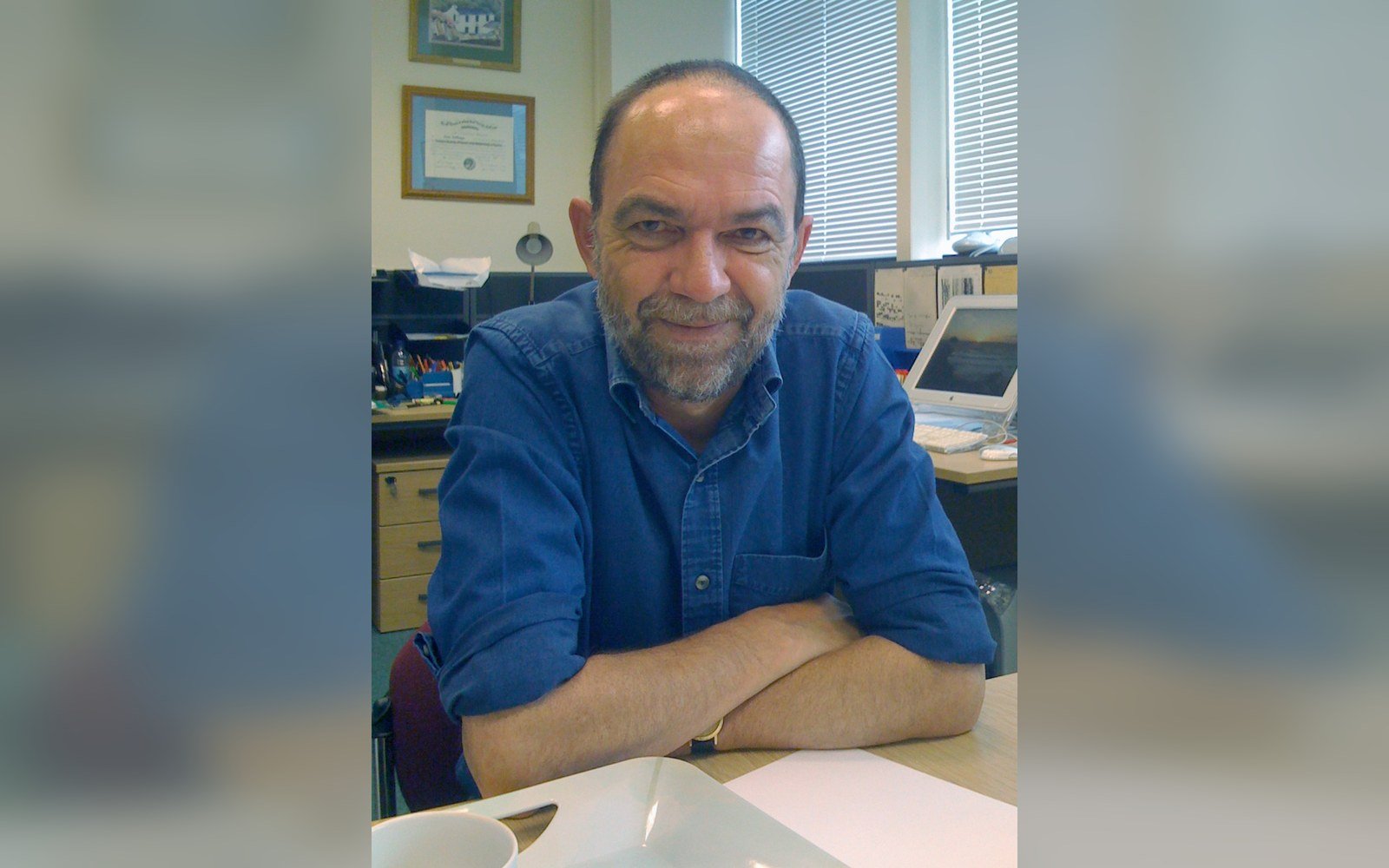
Alec Jeffreys
Geneticist, University of Leicester
Developed the first genetic fingerprinting method after seeing that minisatellite repeat lengths varied between individuals, and published the result in Nature in 1985.
Photo: Alec Jeffreys · Wikimedia Commons
The technique's credibility was not unlimited. American courts saw early challenges, most notably in the People v. Castro case in New York in 1989, where a hearing examined the laboratory work behind a DNA match and found it wanting — not in the underlying science, but in the quality of the analysis as performed. SWGDAM, the Scientific Working Group for DNA Analysis Methods, emerged partly from the recognition that a valid technique could still produce unreliable results if applied without consistent standards. The difference between the science being sound and any particular result being reliable would become a running theme in forensic DNA's development — through the expansion of CODIS and its core loci, through the establishment of accreditation schemes, and into the present arguments about probabilistic genotyping and low-template interpretation.
What the Leicestershire cases established, in 1987, was more foundational than any of that. They showed that biological material at a scene could be compared to a known sample in a way that was independent of what a witness said, what an investigator believed, or what a defendant admitted. The Innocence Project ↗, founded in 1992 by Barry Scheck and Peter Neufeld at Cardozo School of Law, would later use exactly this independence to drive post-conviction review — applying DNA testing to cases decided before the technique existed, and demonstrating that some of those decisions were wrong. Gary Dotson, exonerated in Illinois in 1989 (before the Innocence Project existed), followed the same logic that had freed Richard Buckland: the evidence, read without the contamination of prior expectation, pointed somewhere other than the person who had been accused.
The method's power was never that it was infallible. It was that it was independent.
Within two years, his laboratory was reading those patterns from biological evidence in a criminal investigation — not to convict, but to eliminate.