The Method/Entry 1.03/One technique, and what it can and cannot carry
PCR and the single locus
Amplification changed the requirement completely: enough copies could be made from a very small starting amount to read one site at a time reliably.
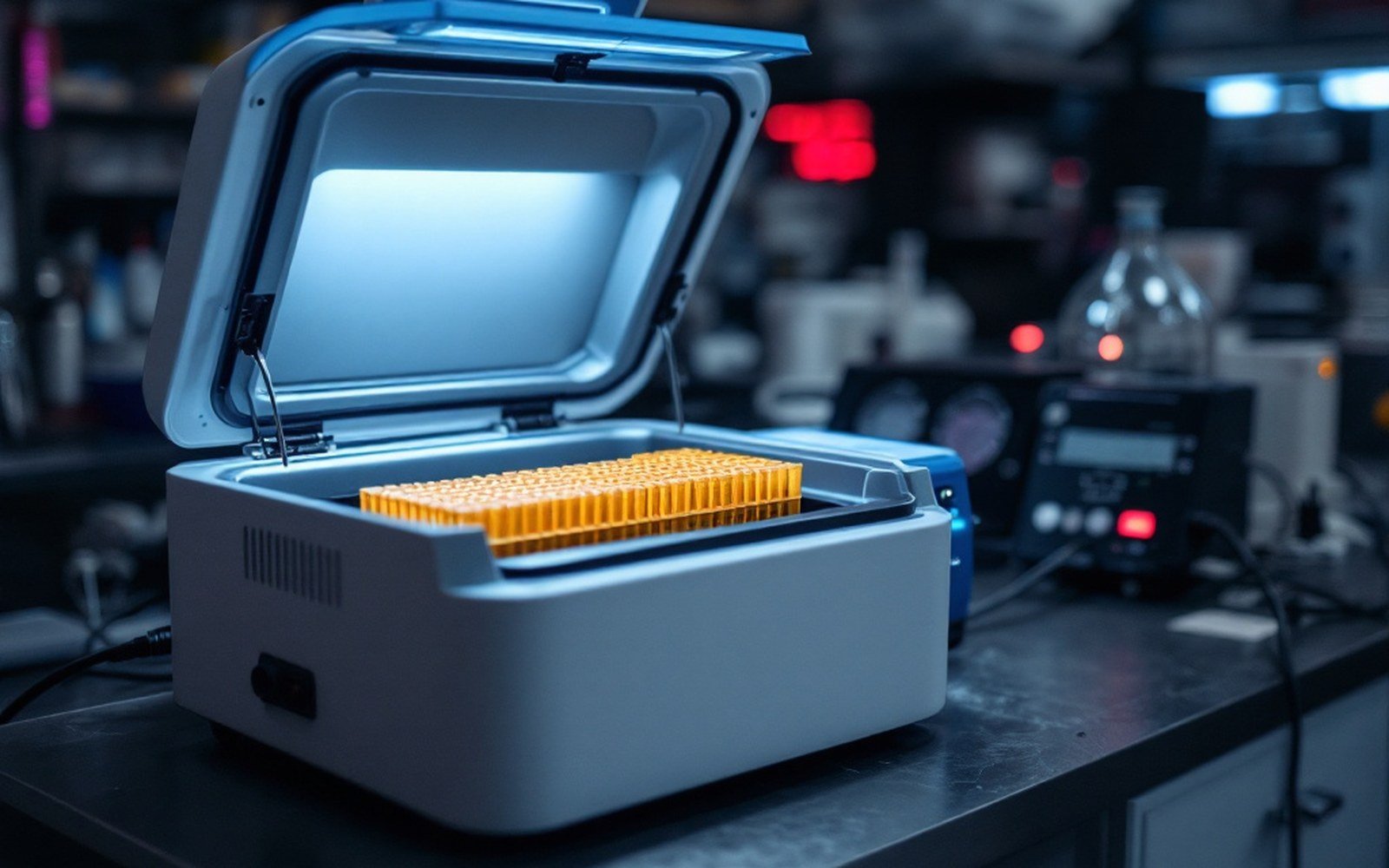
How amplification turned a vanishingly small sample into a readable result — and why reading one site at a time was both a breakthrough and a limitation.
From Bulk to Trace
Early forensic DNA work was voracious. The restriction fragment length polymorphism method that followed Alec Jeffreys's 1984 discovery at the University of Leicester required microgram quantities of DNA — clean, intact, undegraded. A blood stain left outdoors for a week, a hair root, a decades-old swab: all of these could fail before the analysis even began. The technique was powerful, but it was also fragile in exactly the ways a crime scene is not.
The pivot came from a different corner of biology entirely. In 1983, Kary Mullis conceived the polymerase chain reaction — PCR — while driving along a California highway, and the idea was simple enough to seem obvious in hindsight: use a heat-stable DNA polymerase and short primer sequences to copy a defined stretch of DNA repeatedly, doubling the target with each cycle. After thirty cycles you have, in principle, more than a billion copies of a sequence that existed once. Mullis received the Nobel Prize in Chemistry for this work in 1993 ↗, and from the moment PCR was published it was clear that forensic biology would never impose the same sample requirements again.
From the register
Chronology
- 1983Kary Mullis conceives PCR
- 1984Alec Jeffreys's RFLP-based profiling at University of Leicester
- 1992Innocence Project founded
- 1993Mullis awarded Nobel Prize in Chemistry
- Early 1990sDQ-alpha and polymarker dot-blot systems adopted in forensic casework
- Mid-to-late 1990sSTR multiplexes begin displacing single-locus PCR systems
The thermal cycler — the instrument that automates the heating and cooling schedule PCR demands — made the reaction routine. Where gel-based RFLP required a visible quantity of high-molecular-weight DNA, PCR worked on degraded fragments, on template present in nanogram or even picogram amounts, on touched surfaces and old stains. The requirement dropped by several orders of magnitude. What changed with it was the entire philosophy of who could be profiled.
One Site at a Time
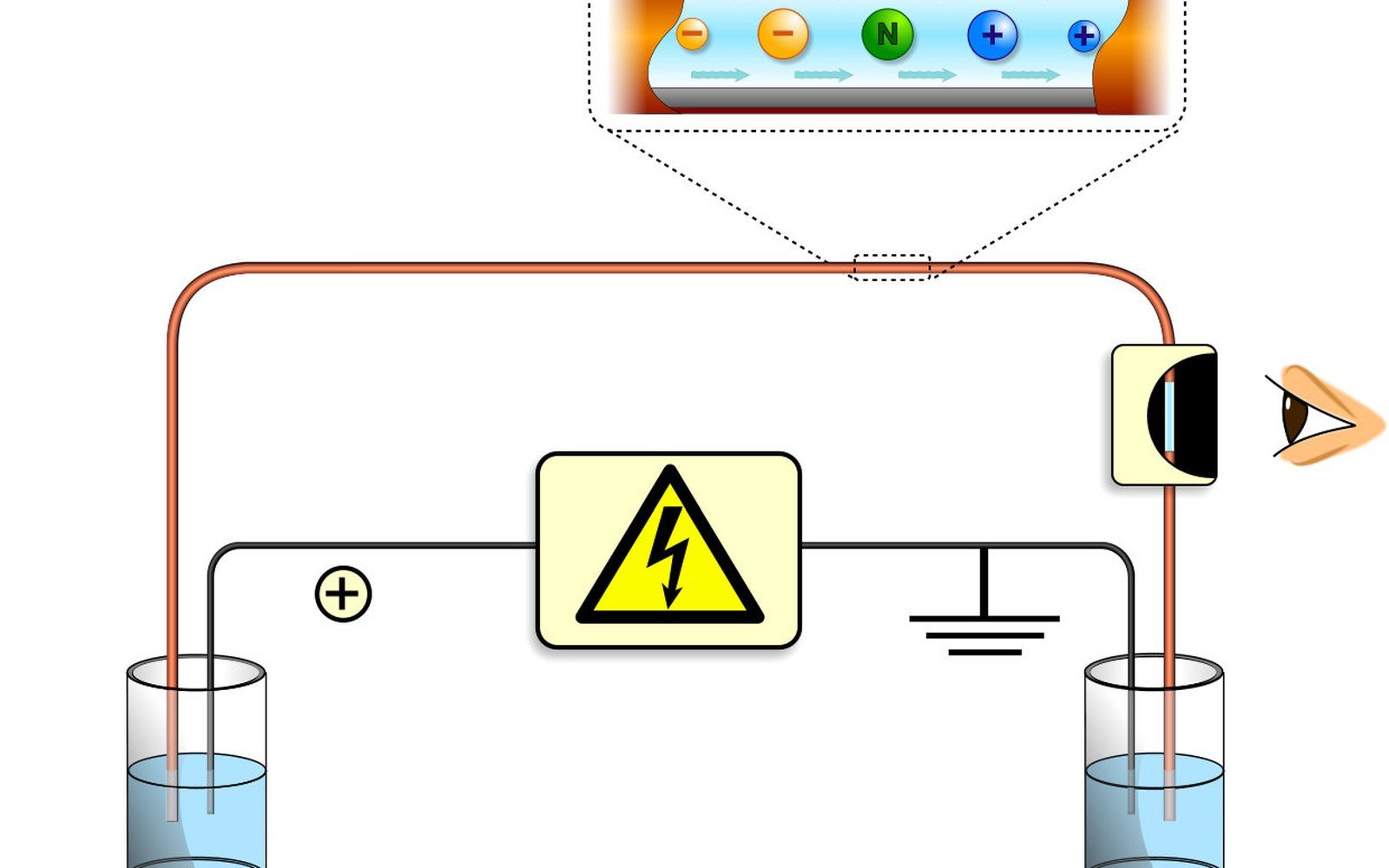
The first forensic PCR systems did not attempt to read many locations across the genome simultaneously. They focused on a single locus — a defined chromosomal address — and asked a binary question: what alleles does this person carry here? The DQ-alpha system, later extended to the polymarker panel, typed a small set of sites, beginning with DQ-alpha on chromosome 6. Results were read from reverse dot-blot strips: a coloured dot appearing at a typed position rather than a band migrating through gel. Laboratories could work with samples that would have returned nothing under RFLP, and the process was faster.
The limitation was discriminating power. Any single locus, however polymorphic, carries only the variants that evolution has maintained at that site. Read one position in the genome and the statistical weight of a match is modest — many people share the same allele combination at any individual locus. The likelihood ratio from a single-locus result could rarely exclude more than a large fraction of the population. That was genuinely useful for exclusion — ruling someone out — but for inclusion the numbers were sobering. Prosecutors and courts had to be educated, sometimes painfully, about the difference between a match at one site and a match across a profile built from a dozen independent sites.
From the register
Key contrasts
| System | What it demands, and what it returns |
|---|---|
| RFLP requirement | microgram-scale, intact, high-molecular-weight DNA |
| PCR requirement | nanogram to picogram quantities, works on degraded fragments |
| Single-locus result | useful for exclusion; modest discriminating power for inclusion |
| STR multiplex | fifteen or more sites, far higher statistical weight per result |
This is why single-locus PCR typing was always understood as a transitional technology. It proved that amplification worked on forensic material. It generated the operational experience — collection protocols, contamination controls, the early debates about interpretation — that the field would need when multiplexed short tandem repeat typing arrived and transformed the calculus entirely. The STR multiplex, which reads fifteen or more sites in a single amplification reaction, could not have been adopted with confidence had laboratories not already spent years understanding how amplified DNA behaves in casework conditions.
What Amplification Actually Proves — and Doesn't
PCR's sensitivity is both its defining virtue and the source of its most persistent forensic problems. Because the reaction amplifies whatever template is present, it amplifies contaminating DNA as efficiently as the target. A single cell deposited by a laboratory worker — on a bench, on an instrument, on the inner surface of a tube — can be copied into a dominant signal. This is why post-PCR work is physically separated from pre-PCR preparation in any serious forensic laboratory, and why the elimination database — a record of the profiles of laboratory staff — is a standard operational tool rather than an optional refinement.
Amplification also does not resolve questions of deposition. DNA from a secondary transfer, where a person's biological material moves from one surface to another without any direct contact with the crime scene item, is amplified just as faithfully as DNA deposited by primary contact. The copied sequence carries no timestamp and no address. A strong, clean single-locus result can place a person's genetic material on an item without placing the person at any particular time or in any particular role. That interpretive gap — between a profile result and what the result means in context — was visible from the technology's earliest forensic applications and has never been closed by any subsequent refinement.
Named in this entry
Kary Mullis
Biochemist, Cetus Corporation
Conceived the polymerase chain reaction in 1983. Amplification is what let a profile be read from nanograms of broken material.
The Record It Left
Single-locus PCR typing contributed directly to several early exonerations, cases where amplification of degraded evidence demonstrated that biological material at a scene did not match a convicted person. The Innocence Project, founded in 1992 and working from archived evidence, used the growing power of PCR-based methods to revisit cases that had been decided before any DNA evidence existed, or decided on serology alone. Post-conviction testing depends entirely on the logic that amplification makes old, small samples newly readable — that the passage of time does not necessarily destroy the evidential record, only concentrate it below the threshold that earlier methods could detect.
SWGDAM's interpretation guidelines ↗, revised iteratively as methods evolved from single-locus typing through STR multiplexes to probabilistic genotyping software, trace a direct institutional line from those early PCR debates. The questions that troubled forensic scientists reading dot-blot strips in the early 1990s — what counts as a match, how to handle mixed signals, how to communicate uncertainty to a court — are the same questions, in more sophisticated form, that the guidelines address today.
The technique was powerful, but it was also fragile in exactly the ways a crime scene is not.
PCR did not solve the interpretation problem. It dissolved the sample-quantity problem so completely that the interpretation problem became the dominant one. Every development since — expanded multiplex panels, low-template protocols, probabilistic genotyping, genetic genealogy — has been a response to what amplification made possible, and to the new questions that possibility opened. The single locus was where that argument began.