The Instruments/Entry 5.04/One technique, and what it can and cannot carry
Rapid DNA boxes
Self-contained units that produce a profile without a laboratory, and the argument about where they should be allowed.
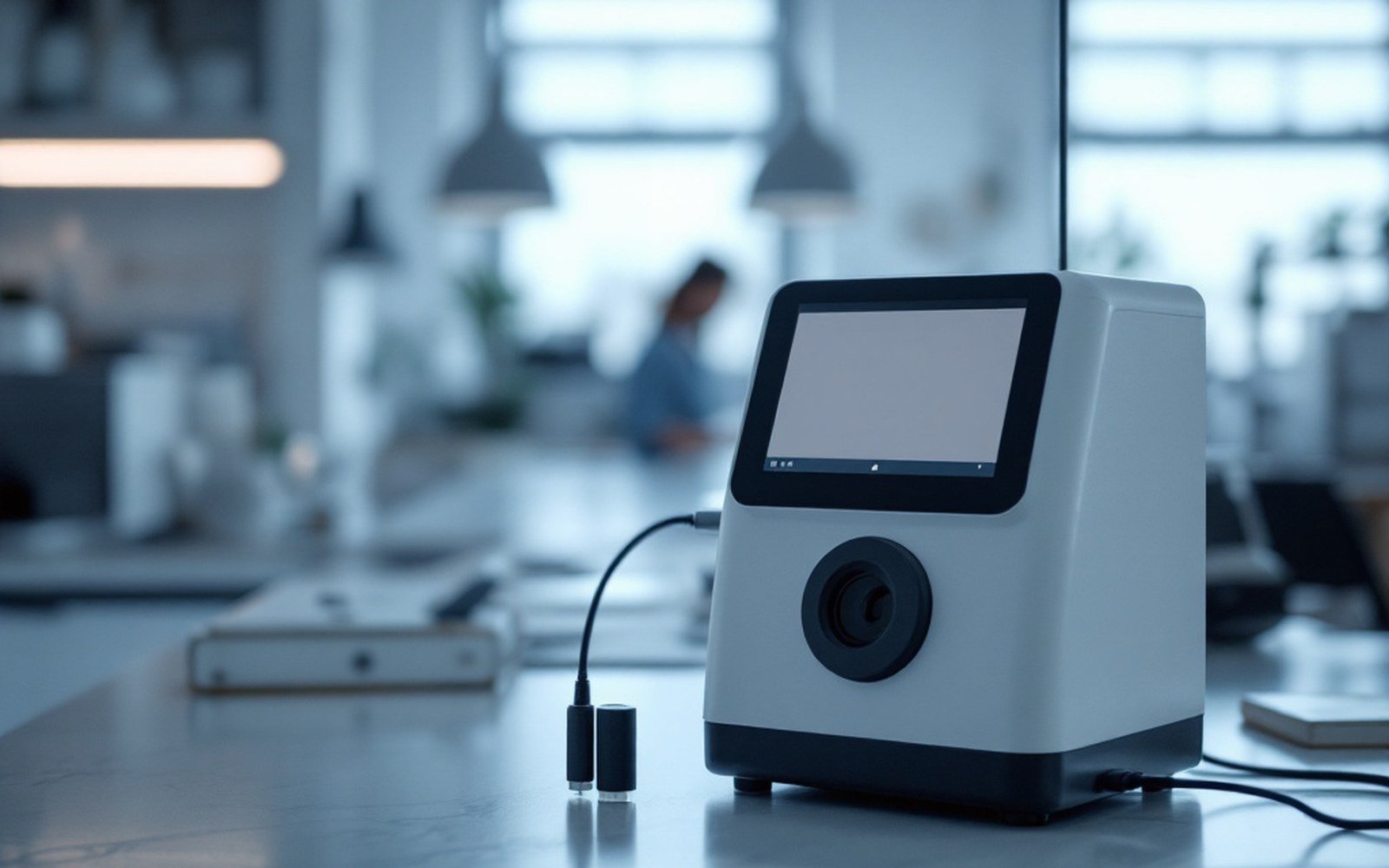
Self-contained instruments that generate a profile in under two hours have moved DNA typing out of the laboratory — and opened a debate about where the science ends and the policy begins.
From lab bench to booking room
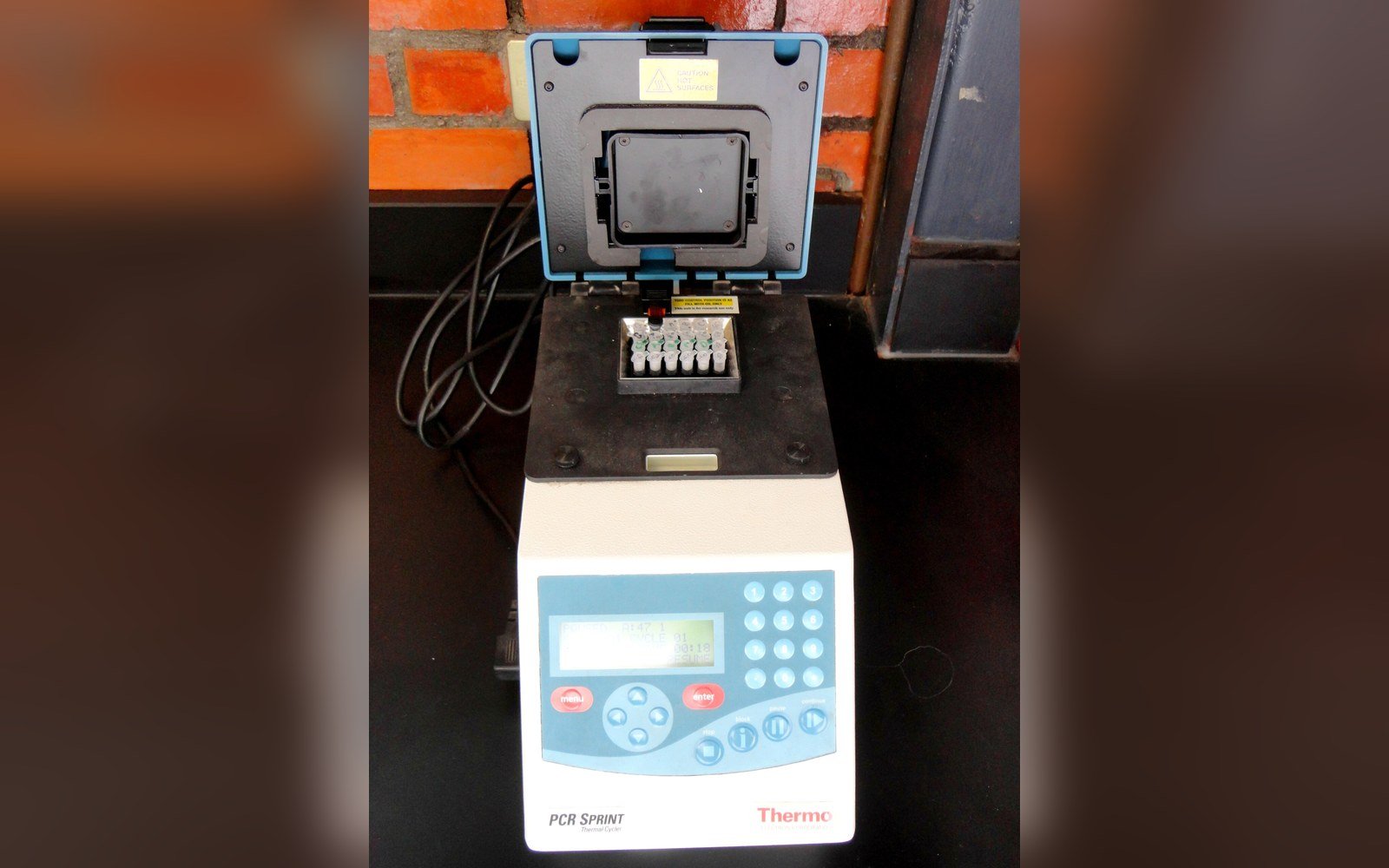
For the first three decades of forensic DNA analysis, a profile required a laboratory: trained staff, controlled conditions, separation equipment, and a review process that might take days or weeks. Rapid DNA instruments — compact, automated units about the size of a large office printer — compress that entire workflow into a single sealed cartridge and return a result in roughly ninety minutes. The operator swabs a reference buccal sample, loads the cartridge, presses a button. The machine performs its own extraction, amplification by PCR, separation by capillary electrophoresis, and peak-calling without any human intervention between swab and result.
The two instruments that have reached operational use are the ANDE system, developed by ANDE Corporation, and the RapidHIT ID, developed by IntegenX (later acquired by Thermo Fisher Scientific). Both read a panel of STR loci that overlaps with the CODIS core loci set, the sites the FBI Laboratory requires for any profile entered into the national database. That overlap is deliberate: a Rapid DNA result is only operationally useful if it can be compared against retained profiles, and the FBI's later approval of the ANDE system for booking-station use made that pathway real. An approved instrument running an approved configuration can upload a profile directly into CODIS — something no portable device could do before.
From the register
What the instrument does — step by step
- Swab loaded into cartridgethe only manual step
- Extraction, PCR amplification, capillary electrophoresisall inside the sealed cartridge
- Peak-calling by onboard softwareresult in roughly ninety minutes
- CODIS uploadpossible only on FBI-approved instruments running approved configurations
The booking-station argument
The use case that drove regulatory approval was the arrestee booking station. Under existing US law, jurisdictions that collect DNA from arrestees at booking were doing so on paper, sending samples to a state laboratory, and waiting — sometimes weeks — for a CODIS search. Rapid DNA promised to close that gap to the same shift. Supporters argued it would identify people using false names, flag individuals already in the database, and do so before arraignment rather than after.
The FBI's Rapid DNA programme, which governs which instruments qualify for booking-station use and what quality standards they must meet, sets the conditions under which this is permissible. Those conditions are deliberate and narrow: approved instruments, reference buccal samples from known individuals, not crime-scene evidence. The distinction matters because the analytical demands are different. A clean buccal swab from a single person is the easiest possible input; a touch sample recovered from a complex object is not. The instrument was not designed or validated for the second case.
That boundary has been crossed in practice. Deployments at disaster victim identification sites and, most controversially, at border facilities used Rapid DNA on samples that were not clean single-source references. Immigration enforcement use by US authorities drew particular scrutiny after reports emerged of the technology being applied to shed or touch DNA from individuals in conditions far from a controlled laboratory environment. SWGDAM's guidelines and the National Institute of Standards and Technology ↗'s supporting documentation for forensic DNA analysis both emphasise that validation must match the sample type and the question being asked — a standard difficult to satisfy when the instrument is being used outside its design envelope.
From the register
The approved/unapproved divide
- Approved use
- clean buccal reference swabs, known single-source contributors, booking stations
- Contested use
- crime-scene touch samples, disaster victim identification with complex samples, border enforcement contexts
- Key principle from SWGDAM and NIST: validation must match sample type and question
- not instrument capability alone
What a box cannot replace
Rapid DNA instruments do not remove the need for expert interpretation — they defer it. The instrument calls peaks automatically, but those calls are generated by software that applies thresholds. When a sample is degraded, mixed, or marginally amplified, the software's output requires a qualified analyst to review. The instrument itself has no mechanism to flag that a result is unreliable in the way a trained examiner reviewing a full electropherogram would. That is not a defect unique to Rapid DNA; it is the same issue that runs through low-template DNA work generally, but it is sharpened by the absence of a laboratory environment and the expectation, built into the booking-station model, of a near-instant answer.
Speed is genuinely valuable. In mass-casualty identification, the ability to generate profiles from reference samples on-site and compare them without shipping delays has documented utility. The dispute is not about whether the technology works in its validated range — it does — but about whether the settings in which it is now deployed remain within that range, and who is positioned to notice when they do not.