The Method/Entry 1.06/One technique, and what it can and cannot carry
What a profile is
A profile is a list of numbers at named sites — not a picture, not a sequence, and not a person.
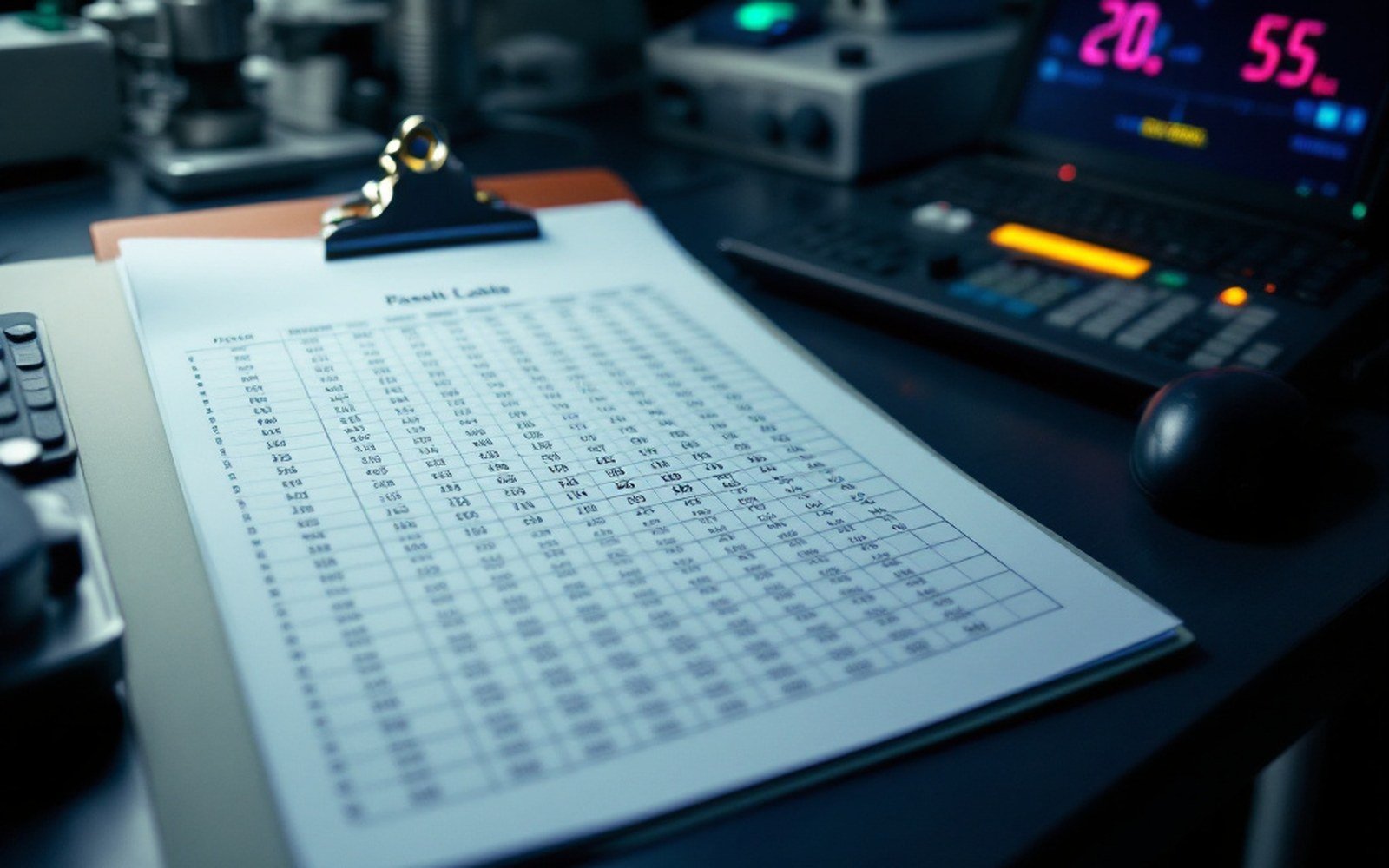
A DNA profile is not a photograph of a genome. It is a short list of numbers — and understanding exactly what those numbers represent is the first step to reading any forensic result clearly.

The list and what it contains
Every profile records the same thing at each tested site: the lengths of two short repeated sequences, one inherited from each parent. These sites are called STR loci (short tandem repeat loci), and the length variants found there are called alleles. A single locus entry looks like "15, 18" — meaning the laboratory detected one allele of repeat-length 15 and one of length 18 at that position. A complete profile stacks those paired numbers across a standard set of loci, currently twenty core sites in the United States, more in some jurisdictions.
The result is a compact numerical record — a genotype list — not a picture, not a medical document, and not a sequence of bases. It captures none of the roughly three billion base pairs that make up the human genome. It says nothing about appearance, health, or ancestry. What it does capture is a combination of repeat-length variants that, across enough loci, occurs at a frequency so low in the general population that two unrelated individuals are vanishingly unlikely to share it.
From sample to numbers
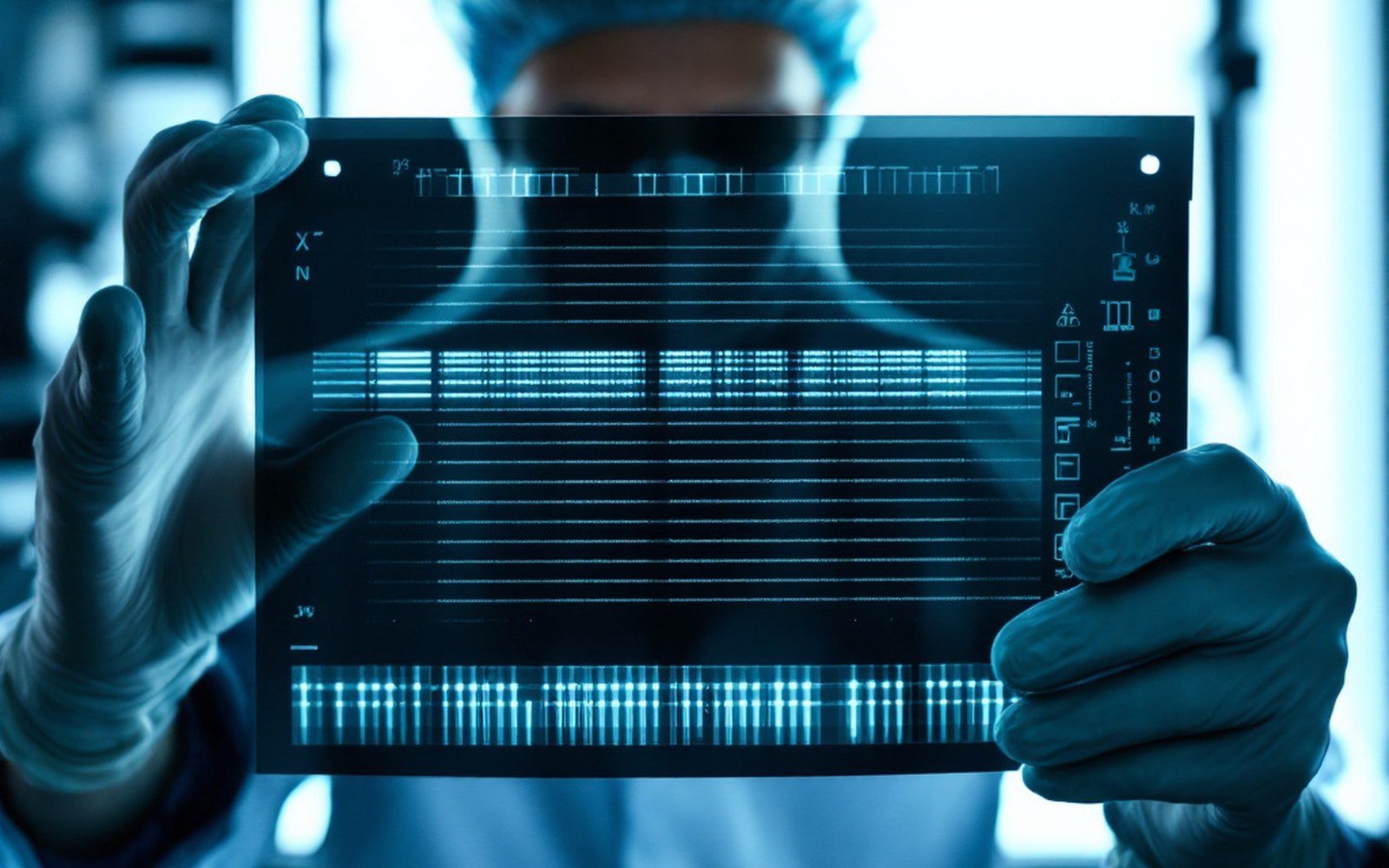
The profile is produced by capillary electrophoresis: amplified DNA fragments travel through a fine tube under voltage, separating by size, and a detector reads fluorescent signals as they pass. Software converts those signals into peak heights plotted against a size scale, and an analyst calls the alleles from the peaks. The numbers that result are compared against a reference ladder of known fragment sizes — the allelic ladder — so that every laboratory reading the same loci speaks the same numerical language.
That comparability matters. A profile generated in one country can be searched against a database in another only because NIST publishes the reference data and standards bodies such as SWGDAM ↗ and ENFSI ↗ specify which loci are read and how. The number "15" at a given locus means the same thing in London, Washington, and Lyon because the underlying measurement framework is shared.
From the register
Key terminology
- STR (short tandem repeat)
- the repeated sequence whose length is measured at each locus
- locus (plural: loci)
- a named chromosomal position included in the standard profile
- allele
- the specific length variant found at a locus; a person carries two, one from each parent
- allelic ladder
- a reference standard of known fragment sizes, used to calibrate allele calls across laboratories
- likelihood ratio
- the statistical expression of how much more probable the evidence is under one hypothesis than another
What the profile does not establish
A matching pair of numbers at every locus means the two samples could share a source. It does not establish that they do. Transfer, contamination, and — in complex samples — mixture or drop-out can all place a profile where it was not expected. The numbers are a starting point for a likelihood ratio, not a verdict in themselves. A profile identifies what was detected in a sample; the investigation must determine how it got there.